LONDON (TICKER) -- The strike of first-half of Joe Cole gave to Chelsea a 1-0 valuable lead Wednesday that entered the leg of the semifinal second of the league of the champions of the next week Liverpool. The goal of Cole was compensates right by the domination of Chelsea in first half and the red ones not been able to put them under any serious pressure in the second period. Liverpool was guilty of a number of steps placed badly at the beginning of and took a fantastic reaction except from Reina de Jose to deny frank Lampard in the eighth minute after it beat Andriy Shevchenko to the cross of Didier Drogba.
Another poor step, this time of Juan Arne Riise, left Chelsea 2 on-1 after 14 minutes but of the passage of Drogba to Cole was poor and Reina could undertake towards outside and collecting. Lampard sent 20 yards free-strikes wide with the narrow foot before Chelsea found the goal that was been threatening after 29 minutes.
Ricardo Carvalho relaxed in front of defense and fed the ball Drogba, that outran Xabi Alonso and it crossed itself in center so that Cole finishes after he had in front of Alvaro Arbeloa. A pile of the mountain range of Zenden of the long knife of the ball during first half but he took 37 minutes you to at the top put his first decent cross in the box for Steven Gerrard on the bar.
Rafa Benitez sent in Peter is crouched for Craig Bellamy after 52 minutes and it above helped to the system for Gerrard the moments after going ahead, Petr Cech to only produce oustanding except of the captain of the red ones. Liverpool gradually began to take hold the control of the game but they could not put the hosts under any true pressure and they almost granted to one second goal 10 minutes as of the time in which Lampard forced a brilliant except of Queen.
Thursday, April 26, 2007

Sunday, April 8, 2007
Mourinho starts UTD of man above title

The owner of Chelsea that Jose Mourinho has taunted the director linked by Manchester Mr Alex Ferguson while claiming plain are “lucky” not to play blue the next week. The cut of Chelsea linked the wire with the top of Premiership at three points in weekend after having beaten Tottenham, while linked lost with Portsmouth. Mourinho indicated: “Plain they are very lucky should not play the next week here. Can you imagine them here the next weekend? “Which is the play to the top from where they will slip, counters us, thus they are very lucky. ” The face of champions of Premiership relegation-A threatened the Western ham on April 18, whereas the next plain play is at the house with plain the Sheffield fight. And the two principal ones disappear head with head with the bridge from Stamford in the penultimate play of the season in a match which can decide the destination of the title. Before the plays of this Ferguson weekend had dépleuré Tottenham just obtaining 36 hours of time of re-establishment of their quarterfinal of cup of Uefa in Seville.
But Mourinho known as: “I was not astonished Ferguson complained about our assembly because it is intelligent and perhaps it thinks that other people are stupid. “But the truth is plain are very, very lucky with the assemblies because, up to now, they always played before us. ” Additional Mourinho: “Ferguson is an intelligent man, a man successful with a great career. “But when you think that other people are stupid it is not a good quality. ”
Ferguson however, believes that Chelsea have more difficult grinding and are entrusting the blue ones will slip upwards in their six remaining assemblies. He said: “Chelsea have many hard plays being thus raised somebody will make them suffer. It is difficult to believe that they will miseront six plays without that occurring. “We are always three points ahead and if I were given this option at the beginning of the season I would have taken it. ”
Beckham invites Ronaldo to remain with plain..
Former captain David Beckham of England advised Cristiano Ronaldo to remain in Manchester linked for the good of his career.
The winger of Portugal was dependent with the true club of Madrid - of Beckham until the end of the season when it moves with the principal football of league with the galaxy of Los Angeles - and Barcelona these last months. After the Ronaldo cup of the world of the last summer was strongly criticized for the part it played by obtaining the plain team-companion Wayne Rooney sent to far during the defeat of the quarterfinal of England against Portugal.
But Beckham, which received the similar treatment after his send-with far with the cup 1998 from the world, believes that Ronaldo should remain in Trafford old man under the councils of Mr Alex Ferguson. “It is with the right club. It is occupied by a director who can deal with somebody who was by what it has,” old the midfielder plain said express Sunday. “I can not have by the things which I made without linked director, the players and the ventilators. I owe them all. ”
The winger of Portugal was dependent with the true club of Madrid - of Beckham until the end of the season when it moves with the principal football of league with the galaxy of Los Angeles - and Barcelona these last months. After the Ronaldo cup of the world of the last summer was strongly criticized for the part it played by obtaining the plain team-companion Wayne Rooney sent to far during the defeat of the quarterfinal of England against Portugal.
But Beckham, which received the similar treatment after his send-with far with the cup 1998 from the world, believes that Ronaldo should remain in Trafford old man under the councils of Mr Alex Ferguson. “It is with the right club. It is occupied by a director who can deal with somebody who was by what it has,” old the midfielder plain said express Sunday. “I can not have by the things which I made without linked director, the players and the ventilators. I owe them all. ”
Thursday, April 5, 2007
Arsenal´s Adebayor aims at the African honor
LONDON (AFP) - butted Emmanuel Adebayor of arsenal believes that it will be identified as higher footballer of Africa within three year. Adebayor, 23, were established while a principal figure for the arsenal this season and Togo international placed her sights on being the best player of Africa voted earlier rather than later. The old Monaco ahead, which adhered to the arsenal for seven million books in January 2006, with hard competition for the honor. The Ivory Coast of Chelsea hold the first role Didier Drogba is the African player running year, and his/her team-companion Michael Essien the blue ones of Ghana is regarded as one of the best young people players in the world. Samuel Eto' O of Barcelona can also claim to be better Africa, but Adebayor, amplified by its transport of 10 goals for the arsenal this season, aims high. “I become better and better,” he said the standard of evening of London. “I have the abundance of the hour to gain the African footballer of the year. I was in the second place once and third once, thus I believe that I can gain it in both or three years to come. “I learn much with the arsenal. It would be large to be one of best in the world one day. This is why I work hard. “For me the important thing is to be formed. In each play I must show that I am a good player. ”
Romario is missing with the research of the 1,000th goal
RIO OF JANEIRO, Brazil (AP) - ventilators was tightened in the stage of Maracana in the hope drank of Romario of the 1,000th, but it was not its night Wednesday.
It was not Vasco, either. The da favoured Gama de Vasco lost 2-1 in modest Gama of Brasilia and was eliminated from the cup of Brazil. Romario, which has 999 goals by its account, had hoped to strike 1.000 and to join large Pele. Peel marked 1.281 goals in a career spanning two decades, and marked its 1,000th in Maracana at the age of 29. Romario, to 41, was frustrated during weeks with its research for 1.000.
“Defense was hard during a certain time and was not any different today,” it said in a televised interview. “But I will arrive there, had God. It is football. ” The concern of Renato Romario by Gaucho of trainer for his 1,000th goal affected the team game. The players were nervous and always trying to establish Romario for a projectile. Although there is a certain question about the account of the goal of Romario, much of ventilators of football also accepted it legitimates and waited ardently until it approached the important stage. The place of appointment of the match of Wednesday was changed so that Romario could try to mark at the stage of Maracana, the temple of Brazilian football where Pele marked its 1,000th goal in 1969. Romario, which combined the skilful work of legs with a speed of the sprinter with his peak, shone of the ventilators of Vasco, Flamengo, Dutch club PSV Eindhoven and FC Barcelona of Spain. Grand Johan Dutch Cruyff called a “genius of the sector of goal.
” Always, much of experts as regards football are doubtful about many goals corresponded by Romario. It counts 71 goals which it marked as a teenager and as an amateur, as well as of others in practice of the plays and the semi-official matches counters small clubs. Moreover, its control had to be updated several times because it has at the counted beginning of the goals marked in the matches which never occurred, and in the plays which finished 0-0. The mark is not identified by FIFA, the governing body of the football of the world, which says that it counts goals only in official contests.
It was not Vasco, either. The da favoured Gama de Vasco lost 2-1 in modest Gama of Brasilia and was eliminated from the cup of Brazil. Romario, which has 999 goals by its account, had hoped to strike 1.000 and to join large Pele. Peel marked 1.281 goals in a career spanning two decades, and marked its 1,000th in Maracana at the age of 29. Romario, to 41, was frustrated during weeks with its research for 1.000.
“Defense was hard during a certain time and was not any different today,” it said in a televised interview. “But I will arrive there, had God. It is football. ” The concern of Renato Romario by Gaucho of trainer for his 1,000th goal affected the team game. The players were nervous and always trying to establish Romario for a projectile. Although there is a certain question about the account of the goal of Romario, much of ventilators of football also accepted it legitimates and waited ardently until it approached the important stage. The place of appointment of the match of Wednesday was changed so that Romario could try to mark at the stage of Maracana, the temple of Brazilian football where Pele marked its 1,000th goal in 1969. Romario, which combined the skilful work of legs with a speed of the sprinter with his peak, shone of the ventilators of Vasco, Flamengo, Dutch club PSV Eindhoven and FC Barcelona of Spain. Grand Johan Dutch Cruyff called a “genius of the sector of goal.
” Always, much of experts as regards football are doubtful about many goals corresponded by Romario. It counts 71 goals which it marked as a teenager and as an amateur, as well as of others in practice of the plays and the semi-official matches counters small clubs. Moreover, its control had to be updated several times because it has at the counted beginning of the goals marked in the matches which never occurred, and in the plays which finished 0-0. The mark is not identified by FIFA, the governing body of the football of the world, which says that it counts goals only in official contests.
Tuesday, March 27, 2007
David James keeps faith with deprived fans

By: Chris Oakley
www.sportingo.com
The Pompey keeper thinks players should give money back to the fans for playing badly - but would it work?
Here's an interesting idea: Portsmouth goalkeeper David James has this week publicly suggested footballers could give money back to the fans if they put in a bad performance. He reasons that all those fans travelling hither and yon across the country watching their teams playing away from home in all weathers deserve some form of financial reimbursement if their team produce a stinker.
The idea came to mind as he travelled home on the coach with his team-mates after a heavy defeat at Blackburn. When put to them, he found they supported the idea more than he realised. Giving money back to the supporters' club would appear to be the way forward, then... but could it work?
The first thing to consider is how exactly to quantify a bad performance. Could the overall display be considered bad if a team loses due to a couple of poor goalkeeping errors, or through one or two players being sent off? Could it even be calculated with the use of the comprehensive statistical systems currently employed in the Premiership, each player's rating being reduced because of few tackles being made or a low numbers of accurate passes?
One might even consider that a team could under-perform if their coach makes bad tactical decisions or buys a poor player to bolster the squad.
James's idea seems doomed to failure, so is it worth pursuing? Surely if you buy a ticket to a match, you're entering a contract to be entertained but not necessarily to be given a peak performance?
And what if you support a lower-league side? Could you reasonably ask for superlative achievement week in, week out? Some Premiership fans wouldn't, and the only way you could feasilbly demand it is to ensure they are first part of a 12-team 'Super Premiership' or some such elitist movement.
Maybe punishing players in the pocket would encourage them to pull together in order to play better. It's an old-fashioned system known as 'teamwork'. The idea is that you avoid playing badly in isolation by employing a dynamic new approach called 'playing well for each other.'
Just a minute - aren't they supposed to do that already? I seem to have lost sight of that small fact, and it pains me to say it but I think David James has, too...
American duo set to take Liverpool private
LONDON (AFP) - US tycoons George Gillett and Tom Hicks are on the verge of owning one hundred percent of Liverpool football club, a statement to the London Stock Exchange revealed on Tuesday.
The pair's takeover vehicle, Kop Football Limited, has reached an agreement to buy 98.6 percent of the club's shares. Under London Stock Exchange rules the American businessmen are entitled to demand the sale of the outstanding 1.4 percent of shares.
Kop Football Limited said it now intends to seek to re-register Liverpool as a private limited company.
Earlier this month Hicks and Gillett had gained unconditional control of the club by passing the 80 percent threshold, after having a takeover bid worth 438 million pounds (646 million euros, 862 million dollars) accepted by the Liverpool board.
"Further to the offer made on 19 February 2007 by Kop to acquire the entire issued share capital of Liverpool and the announcement on 13 March 2007 that all conditions relating to the offer had been ... declared unconditional in all respects, Kop announces that the offer closed" on Monday, the statement said.
Liverpool is the third Premiership club to fall into US hands during the past two years after Manchester United was bought by the Glazer family and Aston Villa by tycoon Randy Lerner.
A report published Monday suggested that US entrepreneur Stan Kroenke was approached by ITV about buying the British broadcaster's 9.9-percent stake in Premiership outfit Arsenal.
Premiership clubs are being bought at a time when income of each of the league's 20 clubs is set to rise by an average of more than ten million pounds per year following a record-busting overseas television rights deal.
Booming demand from Asia and the Middle East has allowed the league to tie up contracts worth 625 million pounds for broadcasting rights for the next three years, boosting overall media income to a total of 2.725 billion pounds, 60 percent above current income levels.
source : soccernews.com
The pair's takeover vehicle, Kop Football Limited, has reached an agreement to buy 98.6 percent of the club's shares. Under London Stock Exchange rules the American businessmen are entitled to demand the sale of the outstanding 1.4 percent of shares.
Kop Football Limited said it now intends to seek to re-register Liverpool as a private limited company.
Earlier this month Hicks and Gillett had gained unconditional control of the club by passing the 80 percent threshold, after having a takeover bid worth 438 million pounds (646 million euros, 862 million dollars) accepted by the Liverpool board.
"Further to the offer made on 19 February 2007 by Kop to acquire the entire issued share capital of Liverpool and the announcement on 13 March 2007 that all conditions relating to the offer had been ... declared unconditional in all respects, Kop announces that the offer closed" on Monday, the statement said.
Liverpool is the third Premiership club to fall into US hands during the past two years after Manchester United was bought by the Glazer family and Aston Villa by tycoon Randy Lerner.
A report published Monday suggested that US entrepreneur Stan Kroenke was approached by ITV about buying the British broadcaster's 9.9-percent stake in Premiership outfit Arsenal.
Premiership clubs are being bought at a time when income of each of the league's 20 clubs is set to rise by an average of more than ten million pounds per year following a record-busting overseas television rights deal.
Booming demand from Asia and the Middle East has allowed the league to tie up contracts worth 625 million pounds for broadcasting rights for the next three years, boosting overall media income to a total of 2.725 billion pounds, 60 percent above current income levels.
source : soccernews.com
Monday, March 26, 2007
Soccer Speed
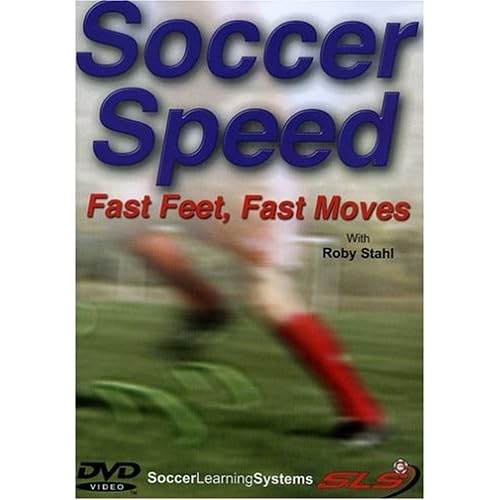
Speed is an essential component of most sports. Someone who is said to be fast is someone useful to have in a team. But what does speed, or being fast mean? It doesn't just mean being able to sprint 100 meters in a fast time. Being able to run fast in a straight line is great for a track athlete but for a lot of sports, and especially for soccer, speed means a few things. For soccer we see speed as: 1. the ability to accelerate quickly 2. a high maximum speed 3. the ability to react quickly to situations 4. being able twist, turn and change direction quickly 5. the ability to produce bursts of fast running throughout the game 6. the ability to read a situation and anticipate 7. the ability to move the ball and use the ball at speed The first five elements are areas that we can improve upon in specific speed training. The last two are areas that are specific to soccer training with a ball. Some key points to remember when doing specific speed sessions (that is sessions without a ball) are: Players must be fully warmed up Speed work should be done at the start of a session when players are fresh Speed requires explosive movement and care should be taken if players tired or have injuries. Good form and technique together with relaxation is the key to running fast. A lot of people say that sprinters are born and not made, and while it is true that genetics plays a large part in a players ability to move quickly, all players can improve all aspects that make up speed. These are just some of the ideas I use when working on different aspects of speed. Acceleration To get acceleration, a player needs to move his/her feet very quickly, gradually increasing stride length as he/she drives forward. Fast feet drills, using speed ladders etc. can greatly help a players acceleration as well as coordination. Strength can be increased using sprint drills and low intensity ply metrics (for players 13+). Weight training is ideal to gain specific strength but not for youth players under the age of 16 or so. Maximum Speed Maximum speed requires leg strength and leg speed. One way in which youth players can gain more leg strength and leg speed is to work on sprint drills. These are drills that break down the sprinting action and work on specific areas. I like to use these as part of a long warm up session and usually perform them over roughly 20-30 meters. With all these drills, it is important that the arm action is strong and relaxed. Mimic the arm action of sprinting style, so for instance if doing bum kicks, don't try and kick your hand that you place behind you, run with normal arm action. Bum kicks, concentrate on leg speed High knees, taking care not to lean back Skips for height Skips for length Bounds for length (players 13+) Hops for length (players 13+) Do 2 to 4 repetitions of good quality drills, slow jog or walk back to recover. Reaction Speed Having players sprint when they are given a command. The command can be visual or a sound. Remember that in game situations, they will usually react to visual stimuli. It is also a good idea to have players react while they are moving rather than standing still. Players would not normally be stationary during a game, and nor would they usually be required to react quickly and at speed from a stationary position. Lots of fun game type drills can be used, where players in pairs react to a command or signal as part of race or relay. This keeps players concentrating on the command and therefore making their running reaction more natural and relaxed. In other words, rather than have them stationary, then you say "set" "go", they are running on the spot and may have to jump, turn, or sprint forwards, backwards etc. Change Direction Setup drills and sprints where the players are not just running in a straight line. Get them to run back then forwards, side to side, then back, diagonally etc. In a game there are no restrictions on the directions they will so incorporate multi direction runs into speed training. Sustain Speed Speed endurance is the ability to hold close to maximum speed for as long as possible, a 400 meter runner has good speed endurance. A soccer player, needs elements of speed endurance but also need to be able to carry out many short bursts of effort during a match. To train for this requires, interval type training, with high intensity and a reasonable recovery period. This type of training, should take place once the player has had some base training to get some initial endurance on which to build more specific speed endurance.
Source: Soccer Fitness
For more information on speed and strength training methods visit: Sport Specific.com
Tuesday, March 20, 2007
NUTRITION FOR SOCCER PLAYERS

Although soccer is the most popular sport in the world, with over 120 million amateur players worldwide, scientific research concerning the nutritional needs of soccer players has been scant. Fortunately, new investigations are being conducted, and the up-to-date research suggests that soccer players should eat and drink like marathon runners!
The link between soccer players and long-distance endurance athletes seems odd at first glance, since soccer is a game involving sudden sprints and bursts of energy rather than continuous moderate-intensity running, but the connection doesn't seem so extraordinary when one considers what happens during an actual soccer match.
In a typical contest, soccer players run for a total of 10-11 kilometers at fairly modest speed, sprint for about 800-1200 metres, accelerate 40-60 different times, and change direction every five seconds or so.
Although soccer players don't cover a full marathon distance (42 kilometers) during a game, the alternating fast and slow running which they utilize can easily deplete their leg-muscle glycogen stores. For example, just six seconds of all-out sprinting can trim muscle glycogen by 15 percent, and only 30 seconds of upscale running can reduce glycogen concentrations by 30 percent!
The high average intensity of soccer play (studies show that topnotch players spend over two-thirds of a typical match at 85 percent of maximal heart rate) accelerates glycogen depletion. Plus, the time duration of a soccer match, 90 minutes, is more than enough to empty leg muscles of most of their glycogen.
In fact, research has shown that soccer players sometimes deplete 90 percent of their muscle glycogen during a match, more than enough to heighten fatigue and dramatically reduce running speeds.
They're Half-Starved!
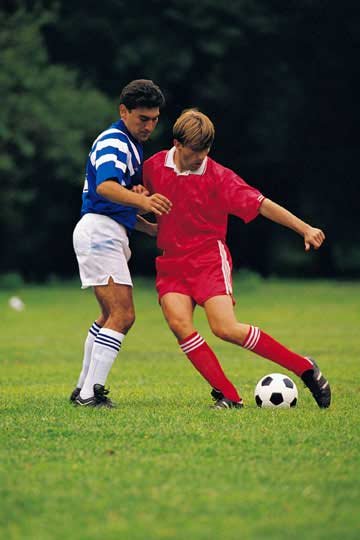 Unfortunately, many soccer players don't seem to be aware of the importance of dietary carbohydrate.
Studies show that large numbers of players eat only 1200 calories of carbohydrate per day, far below the optimal level of 2400-3000 carbohydrate calories. As a result, many players BEGIN their competitions with glycogen levels which are sub-par. Players who start a match with low glycogen usually have little carbohydrate left in their muscles by the time the second half starts.
That leads to bad performances during the second half. Glycogen-poor soccer players usually run more slowly - sometimes by as much as 50 percent - during the second halves of matches, compared to the first.
In addition, total distance covered during the second half is often reduced by 25 percent or more in players who have low glycogen, indicating that overall quality of play deteriorates as glycogen levels head south. Compared to competitors with normal glycogen, low-glycogen players spend more time walking and less time sprinting as play proceeds.
That's why taking in carbohydrate DURING competition can pay big dividends. In recent research carried out with an English soccer team, players consumed a glucose-containing sports drink during 10 of their matches but swallowed only an artificially flavoured, coloured-water placebo during 10 other competitions.
When the players used the glucose drink, the team allowed fewer goals and scored significantly more times, especially in the second half. When the placebo was ingested, players were less active and reduced their contacts with the ball by 20-50 percent during the final 30 minutes of their games. A separate study showed that swilling a glucose solution before games and at half-times led to a 30-percent increase in the amount of distance covered at high speed during the second half of a match.
However, just sipping a sports drink at random before matches and at half-time probably won't do much good, because soccer players must be sure they take in ENOUGH carbohydrate to really make a difference to their muscles.
An excellent strategy is to drink about 12-14 ounces of sports drink, which usually provides about 30 grams of carbohydrate, 10-15 minutes before a match begins.
The same amount should be consumed at half-time, although players may rebel at both intake patterns because of perceptions of stomach fullness. The important thing to remember is that through experience - trying out these drinking strategies on several different occasions during practices - the intake plans will gradually become comfortable and they will help reduce the risk of carbohydrate depletion.
Tapering Is Important, Too...
Soccer players should also eat a small meal containing at least 600 calories of carbohydrate about two hours before competition. 600 calories is the approximate amount of carbohydrate in three bananas and four slices of bread (eaten together).
Players should also try to 'taper' for a few days before matches, reducing their intensity and quantity of training in order to avoid carbohydrate depletion. During the taper and during all periods of heavy training, soccer players should attempt to ingest 9-10 grams of carbohydrate per kilogram of body weight ( 16-18 calories per pound of body weight) each day.
'Grazing' - eating two to four daily high-carbohydrate snacks in addition to three regular meals - can help players carry out this high-carbo plan successfully. However, carbohydrate is not the only nutritional concern for soccer players.
Fluid intake is also critically important. Various studies have shown that soccer players lose - through their sweat glands - from two to five litres of fluid per game.
 Even the lower figure could raise heart rate and body temperature during a match and might reduce running performance by about 4-5 percent for a typical player.
Fortunately, the sports-drink-intake plan described above - coupled with sips of sports drink during injury time-outs - can help to reduce the impact of dehydration.Although water and carbohydrate must be taken onboard, soccer players don't need to worry about replacing electrolytes during play.
Sweat is a dilute fluid with low concentrations of electrolytes, and most players can obtain enough electrolytes - including salt - from their normal diets.
However, the presence of salt in a sports drink can enhance the absorption of water and glucose. Most commercial drinks have about the right concentration of sodium; if you're making your own beverage, you should be sure to mix about one-third tea spoon of salt and five to six tablespoons of sugar with each quart of water that you're going to be using.
After all matches, players should attempt to ingest enough carbohydrate-containing sports drink to replace all the fluid they've lost during competition.
After strenuous workouts, water should also be replaced, and soccer athletes need to eat at least 500 calories of carbohydrate during the two hours following practice in order to maximize their rates of glycogen storage.
By: Peak Performance (www.Bodybuilding.com)
References:
- 'Carbohydrate, Fluid, and Electrolyte Requirements of the Soccer Player: A Review,' International Journal of Sport Nutrition, vol. 4, pp. 221-236,1994)
Soccer Execise and Energy Demands

Just to remind you, there are three major systems available for the production of energy in the muscles: the ATP-PC system for high-intensity short bursts; the anaerobic glycolysis system for intermediate bursts of quite high intensity (this system produces the by-products of lactate ions and hydrogen ions, commonly known as lactic acid); and finally, there is the aerobic system for long efforts of low to moderate intensity.
With sporting events such as cycling, swimming and running, where the intensity is constant for the duration of the event, it is possible to estimate the relative contribution of each energy system.
For example, the energy for the 100m sprint is split 50 percent from the ATP-PC system and 50 percent from the anaerobic glycolysis system, whereas the marathon relies entirely on the aerobic system (Newsholme et al, 1992).
In contrast, games such as soccer are characterized by variations in intensity. Short sprints are interspersed with periods of jogging, walking, moderate-paced running and standing still. This kind of activity has been termed 'maximal intermittent exercise'.
 It would seem reasonable to assume that during a soccer game all three energy systems would be used, as intensity varies from low to very high. However, because it is not obvious just how fast, how many and how long the sprints are, and just how easy and how long the intervening periods are, it is difficult to determine which of the energy systems are most important. Thus most of the soccer-related research has attempted to tackle this problem.
By: Raphael Brandon (www.Bodybuilding.com)
Saturday, March 17, 2007
World Cup 2018: U.S.-Bound?
Chancellor Gordon Brown, the UK's Prime Minister in waiting with a general election on the horizon, announced last week that England would bid to host the 2018 World Cup. Forgive our cynicism, but even the most ardent soccer fans in this country didn't need the CSI: Miami team to deduce that this might, in some way ... just perhaps ... be a thinly-veiled piece of political propaganda.
They say the way to a man's heart is through his stomach, but here in England, soccer comes a long way before soufflé. No matter how strongly Brown's timing of the announcement reeked of sports playing whore to the political monster, if he could make it happen we could probably forgive Labour for everything bar Iraq and put them back into office with a failing health service and a Scot at the helm. After all, it's already been over 50 years since England welcomed Pele, Eusebio, and Beckenbauer in 1966.
To the Chancellor's embarrassment, however, Sepp Blatter, head of FIFA, flew into London last week to crush English hopes as swiftly as they had been raised.
"If the FIFA executive committee decides later this year that the rotation policy is maintained in strict procedure, it should be in North America in 2018 and there are three countries who could host it there — the United States, Mexico, and Canada," said Blatter.
Blatter's rotation policy, which was designed to ensure African nations had the opportunity to host the event (and to garner the international votes that put him in office), is officially set to end in 2014, but it now seems likely to continue. In 2010, the World Cup will be in South Africa and 2014 will visit South America, in the form of Brazil or Columbia.
With Canada an unfashionable and unproven soccer nation, it seems unlikely they would be chosen to host the 21st World Cup in 2018 unless some kind of sporting revolution takes place. Mexico, who hosted the 1986 tournament, will face obvious economic difficulties funding a bid, let alone updating their stadia and infrastructure if it were successful.
All of this points towards to the U.S., who hosted the 1994 event and earned global praise. Sunil Gulati, President of the U.S. Soccer Federation said, "We would be in position to put on a spectacular event. We are much more a part of the sport internationally than we were in 1994."
U.S. soccer fans may not even have to wait until then. As doubts have been cast over both Brazil and Columbia, Blatter has indicated that the U.S. would be the obvious choice as a backup venue in seven years time.
"We have said that the 2014 World Cup will be staged in South America, but if there is no candidate strong enough, then we would go north instead as the logical thing," he said.
FIFA officials will make the decision for 2014, along with the future of the rotation policy, this November in Durban, South Africa. If the U.S. is chosen to host the tournament, it is thought the 2018 World Cup could become open to nations from Asia and Europe — opening the door once more to England.
Other nations interested in 2018 include Australia, deemed part of Asia on planet football, and China, for whom money is unlikely to be an object.
From an American perspective, the future looks bright. FIFA is keen to grow the sport in the U.S. and its infrastructure and stadia are already equipped to host the event. With David Beckham rumored to be at the marketing forefront of any potential campaign, U.S. soccer fans seem destined to have the world's greatest sporting event on their doorstep sooner rather than later.
By Will Tidey
Wednesday, March 14, 2007
SOCCER PSYCHOLOGY "Empathic Listening"
While at a tournament game, one of your most active players seems only involved in the game a fourth of the time. He seems to be mentally absent... a step behind, a dollar short, lackadaisical. Something is just not right.
As coaches, we are by nature quick to prescribe an antidote. The coach reasons (left brain) that there is not much time in the heat of battle to really listen. At practice, we only have a couple hours--and so much to get done. And at games? Even less time. Yet sometimes the coach prescribes an antidote before really understanding the nature of the illness. "Scott, where are you today? You've got to move to the ball. It's not going to come to you? " And yet the player's response is remote, almost as if the message were in ancient Assyrian.
After the game, the player comes up to you and says, "I don't want to play anymore. I'm just not having fun." Sensing that this might not be a quick- fix situation, many coaches opt out with, "Well, if that's what you want to do, I want what's best for you. " But what is best for the player, many times, is to listen... really listen.
To be an effective communicator--a coach who can get a point across-- you must also be a good listener Unfortunately, listening seems to be one of those subjects humans hastily overlook. Listening can be classified into four levels. The first is to pretend to listen. Much of the message is tuned out. The listener appears to stay interested: "Uh- huh...(Looking away)...Right." The second involves selective listening, or listening to only what we want to hear. "Blah, blah, blah...playing soccer...blah, blah, blah." The third incorporates the primarily left-brained attentive listening. Words are concentrated on, but everything else escapes. The fourth level is that of empathic listening. Empathic listening is based upon empathy, meaning to "understand so intimately that the feelings, thoughts, and motives of one are readily comprehended by another. "
Empathic listening is a high level of listening because the listener tries to experience life from the other perspective. As the saying goes, "To understand a person, you must first walk in his shoes. " Feelings, thoughts, and motives are under- stood more by the heart and eyes than the ears. If ears are the only method used for hearing, much of the message is lost. Body language (stance, movement) and sounds (tone, volume) tells more about the message than words. Empathic listening is more right brained: holistic, intuitive, and visual.
People frequently avoid empathic listening because they perceive it as a risk. One must be very secure in order to listen so deeply as to experience the feelings, thoughts, and motives of another. Yet to have influence, you must first allow yourself to be influenced. Unless the coach, at the appropriate times, makes the effort to listen empathically, why would the players make the effort to mold their style of play for the coach?
So the coach commits herself to listen empathically. But during the process, she is again tempted to become Ms. Quick-Fix by recommending a solution right out of her own past. Her impatience causes her to tear out a page from her autobiography because that's "what worked for me." The assumption is, if it worked for me, it will work for you.
As a result, the coach tailors the listening response into one of four categories. The first is to advise, or recommend a solution based upon the experiences of the self. The second response is to probe, or to ask questions which spring from the experiences of the self. To interpret is a third attempt to comprehend the motives or behavior of another through self-comparison. And fourth, to evaluate is to agree or disagree according to self-standards.
Obviously, these responses are selfish and do little to uncover deeper feelings, thoughts, or emotions because they are primarily left-brained. The heart of the matter will not surface (this time or next) if every time a story comes out, it is probed raw, greeted with an evaluation, smothered with advice, or subjected to interpretation. The result is chapped players who provide reclusive one word answers... "Fine, " 'Yep," "Nothing. " They chatter incessantly during practice; yet when you pull them aside, body language says: "leave me alone."
To listen empathically is to understand, rather than be understood. Empathic listening furnishes the psychological security needed to release the innermost feelings into a more public spectrum. This relieving of pressure is deeply therapeutic. And therapeutic healing calcifies gratuity into greater confidence, improved communication, and more fulfilling relationships.
To listen empathically, and avoid selfish pitfalls, one must ascend four listening skill levels. The first is to mimic or repeat the content, forcing the listener to digest the spoken word. However, this skill is the least effective.
The second skill level consists of rephrasing the content of the message, or putting the message into your own words. If a player states, "I have a problem," you rephrase it, saying, "Something's wrong."
Bringing further understanding is the third level, as the feeling of message is reflected. More than rephrasing, reflection involves the right brain because the receiver mirrors the emotion, feelings, passion involved in the message. "I'm just not having fun anymore" is equal to "You're feeling burned-out. "
The fourth level is more encompassing because it includes both rephrasing and reflecting. The left hemisphere deciphers the language, the right provides the affection. "I just have more important things to do" is rephrased and reflected back as, "You're feeling stressed about something you have to do." 'Yes! You see, I don't really want to stop playing, it's just that my Father is telling me that if I don't get straight A's, then he'll take my car away."
"He'll steal your wheels and that's a bummer."
"Big time, because then I can't see my girlfriend. "
"You'll miss being with your girl and you really like her."
"Very much. We're even talking about getting engaged."
"Scott, I care about you, and your relationships. I also think grades are important. "
'Well, I really don't want to quit playing soccer. I just need to concentrate a little more on grades. Maybe we could work something out?"
"How about this: you make studies your first priority. If that means missing practice, and a little game time, that's O.K. because you'll still reduce the pressure from your Dad while enjoying playing soccer. When you get your grades up, and feel like you can come to every practice, we'll re-evaluate then. Sound fair?"
"Yeah. Thanks a lot coach. "
Because the coach listened empathically, the player felt relaxed enough to open up, to get to the heart of the matter without becoming defensive, short, or frustrated. Psychologists refer to this feeling of having enough room to breathe as psychological air.
Empathic communication rearranges the nature of the opportunity. Rather than simply an exchange of information, the talk promotes change or transformation. During this process, the player will go from emotional to logical. while the passion, the concept, and intuition for the effort is generated from the right hemisphere, it is from the left hemisphere that problems are managed in a logical manner. when the player arrives at this logical stage, the coach has a better opportunity to inquire, to advise. If the player returns to an emotional state, it is beneficial to return to listening empathically, until the logical state returns.
Again, many will argue that to listen empathically requires more time than is available. And this is frequently the case. Certainly during the midst of a tumultuous game, there are few moments in which to compose such masterpieces. Taking the time to purchase and install a smoke detector takes time too. And how many lives have those investments saved? Empathic listening is worth the investment.
by Jason Vittrup
Good Soccer Coaching Tips
Coaching Tip #1: Bring A Positive Coaching Attitude to Practices.
Many parents and coaches come from stressful work situations directly to practice. It is only human for some of that stress to creep into attitudes on the field. Here's a great way to combat this.
Look in the mirror of your car and say... "Today is a great day for soccer - we're going to have fun today!"
Say it three times - OUT LOUD!
I know it sounds goofy but it is guaranteed to put a smile on your face, and once you start smiling you will have stress beat. Then go on out there and have some fun! Praise a lot, smile a lot encourage everyone to be supportive.
Coaching Tip #2: Expectations
This is what I have posted in my car and read before each practice to set my head straight prior to starting:
"I have high expectations of you. I expect you to succeed."
The bottom line is this - threats, sarcasm, being cynical, and shouting may cause the goose to lay one more golden egg, but it might be the last.
Coaching Tip #3: Life outside soccer
Never forget that soccer may be the only thing going right in a player’s life that day – don’t mess that up. Soccer can be a refuge for players whose home life is a mess, whose boyfriend just broke up with them, who made a failing grade on a test that day, etc.
Top 10 Worst Mistakes Trainers Make
Many parents and coaches come from stressful work situations directly to practice. It is only human for some of that stress to creep into attitudes on the field. Here's a great way to combat this.
Look in the mirror of your car and say... "Today is a great day for soccer - we're going to have fun today!"
Say it three times - OUT LOUD!
I know it sounds goofy but it is guaranteed to put a smile on your face, and once you start smiling you will have stress beat. Then go on out there and have some fun! Praise a lot, smile a lot encourage everyone to be supportive.
Coaching Tip #2: Expectations
This is what I have posted in my car and read before each practice to set my head straight prior to starting:
"I have high expectations of you. I expect you to succeed."
The bottom line is this - threats, sarcasm, being cynical, and shouting may cause the goose to lay one more golden egg, but it might be the last.
Coaching Tip #3: Life outside soccer
Never forget that soccer may be the only thing going right in a player’s life that day – don’t mess that up. Soccer can be a refuge for players whose home life is a mess, whose boyfriend just broke up with them, who made a failing grade on a test that day, etc.
-
Coaching Tip #4: Soccer is not a matter of life or death.
"If you're going to make every game a matter of life or death, you're going to have problems. For one thing, you'll be dead a lot." NC Basketball Coach Dean Smith.
Top 10 Worst Mistakes Trainers Make
- Failing to prepare everything needed (facility and equip) ahead of time.
- Starting late, OR WORSE … running overtime.
- Talking too much.
- Forgetting breaks.
- Not laughing at yourself when the unexpected happens.
- Giving unclear directions.
- Not smiling.
- Not involving the players.
- Not reading the team chemistry (changes all the time!), and therefore, not knowing when to change strategies or pace.
- The all-time worst mistake - not being real. Passion is everything.
Saturday, March 10, 2007
Learn How To Play Soccer Aggressively
When you learn how to play soccer, the winning streak lies in playing aggressive.The simple formula that works in soccer is which team is stronger and faster.
Therefore, it is good that you learn all the skills, instincts and field vision, but at the same time, you must also learn how to bring aggression into your game.
-
Aggressive Play Is Very Important On Both Offense And Defense
Hustling and playing aggressively is very important. If you do not play that way, you are very much likely to lose to a team that is significantly more aggressive.
By aggressive play, I mean hustling. It means the players must not be afraid of making contact and "winning" the "50/50 balls.” "50/50 balls” are the loose balls that either team has an equal chance of winning.
If you are afraid of contact, it will be difficult for you to win these. The expert coach knows that the teams that wins most of the 50/50 balls and will usually win the game.
The coach should ensure that the defenders are tough and are not afraid of contact. If you have a player in the team who is afraid of contact, it is big disadvantage for you. If you play him or her at Fullback or Sweeper, get ready to give up many goals.
It is very critical for the coach to teach his players to not only be brave and unafraid of contact, but also to hustle and be aggressive about going to the ball and to win loose balls. However, it is also true that it is not an easy cake to teach the same.
Some players are naturally timid and many of them even consider rough or aggressive play a bad thing. They think that if they play aggressive, someone might get hurt.
Therefore, the coach needs to be well prepared with all his tools and methodologies when he is going to teach his players how to play soccer in an aggressive way.
by Andre BotelhoLearn The 3 Essential Elements Of Coaching High School Soccer
Coaching high school soccer is something that can make a huge difference for winning or losing soccer games.
The strategies regarding the soccer formations, styles of play, soccer defence, the speed of play and free kicks are some of the most important elements that can give the high school soccer players a winning edge over the other team.
-
Playing With Much Slower Or Weaker Team
It is very important for the coach and players to keep in mind that playing with a much slower and weaker team can slow down the team’s play. An expert coach understands that this is a potential problem for coaching soccer at high school level.
Actually, when you play against a much weaker or slower team, your team will dribble more or play more slowly. This can work as a disaster because when you get to play a good team, it is obvious that your team will take ten to twenty minutes to adjust back to the faster game speed.
This will give enough time to your opponent team to take control of the game. Always remember that even a single goal deficit against a tough opponent will not be an easy cake to overcome.
Therefore, a good approach is to consider playing your substitutes or second team against a weaker or slower team.
- Weight And Speed Training
Weight and speed training is another factor that most of the soccer teams overlook at the high school level. A good coach knows that in order to make a winning team, it is not just the impressive skills, good instincts and field vision that the player needs to work on, but his strength and speed. High school soccer players must spend a significant amount of time on weight and speed training.
- Using A Sweeper Is Often Better Than A Flat Back 3 Or 4
In high school soccer game, when the Flat Backs know that they have a Sweeper backing them up, it allows them to play more aggressively and to mark closer and take chances to win 50/50 balls.
Overall, when it comes to coaching high school soccer, you must understand that at higher levels, skills of the players are more or less similar, but what makes the big difference is which team is faster and stronger.
by Andre BotelhoGetting to the Turning Point-- Self Motivation to Play the Game
A self-motivated, talented soccer player that loves the game is a coach's dream. Of the hundreds of soccer players that a coach may come into contact with each year, only a few fit this description. Why? Are we doing something wrong as soccer coaches, parents of soccer players, or league administrators; or is it just happenstance that so few youth players seem to be self-motivated to improve and play hard? How many young soccer players do you know that actually do their off day or off season training without a phone call from their coach or coaxing from a parent? How do we help get a young soccer player to the turning point--self-motivation to play and practice the game?
This article is based on experiences with, and observations of, high-level soccer players and youth players from various levels and ages. The comments in this article are not based on any statistical or clinical study, meaning that the conclusions are subjective and could be dead wrong. Also, this article is not about the pre-game motivational speech that many coaches (including me) pride themselves on, thinking it was that speech that motivated the team to a great game. That one-time, spirited show of emotion before a game can motivate a team to play well but that type of motivation ends with the game. How do we, as soccer coaches and parents of soccer players, get a player to the turning point, i.e., long term, self-motivation to play hard during the high mental and physical stress experienced while playing soccer? That is the focus of this article.
What affects a young soccer player's motivation? When asked this question, one response is a shrug of the shoulders and the bold statement by a coach that some kids are born with a strong will to compete and win, others are not. This response assumes some type of genetic predisposition to compete during sporting activity. The more complicated answer has us look at the player's home environment, coach, pier pressure, success with the game, and the player's psychological make-up, i.e., how a player responds to challenges, adversity, and competition during the periods of physical pain experienced while playing and practicing the game. All of these factors have some sort of an effect on an athlete's willingness to compete under high stress but, for the young soccer player, one of these factors stands out far above the rest, home environment.
First a Realistic Assessment of a Players Motivation to Play Hard In order to determine if a player is self-motivated to work hard at practice and at games, that player must be observed when taxed physically and mentally. For example, when a team needs a break from hard practices, a coach may have the team play a form of soccer golf or baseball. It is fun and simple. Every player seems motivated and enjoys the practice. Without the stress of a hard, tiring practice, even the completely unmotivated player that merely appears at practice to please his or her parents or friends seems motivated. Put that player under the stress of a tough, physically demanding game or practice and it seems like you have a different player on your roster. Motivation can only be judged when the times are tough, not when the players are basking in the sun during an occasional easy practice day.
Some hard working, self-motivated players get frustrated with an easy day of soccer golf--whether they need it to recover or not. While that type of player wants to be constantly challenged at practice and is impatient to improve technique or team tactics, the unmotivated player merely enjoys the day, hoping for another like it soon. During tough times, it is easy to separate the players that want to learn, i.e., that are self-motivated, from the players that appear at practice or for a game for the wrong reasons. One slight problem when using this measuring stick, some very motivated players that truly want to do well for the right reasons, seem to hold back during adversity on the field not because they are unwilling to work, learn and improve without prompting, but because they lack confidence during play or generally suffer from low self esteem in most life situations. The distinction must be made by the coach or a highly motivated soccer player may slip through the crack.
To determine how to motivate a player, a soccer coach must take time to understand the player. As mentioned, the best way to do this is to observe the player under mental and physical stress during and after a tough game or a tough workout. How did the player respond to the tough challenges on the field? Did the player back down or dig in and compete? After a loss or a bad play, was the player concerned or uncaring? At the point of high fatigue, in an anaerobic state, was the player able to push through the pain and continue to compete or did the player take the easy way and allow his or her teammate or the opponent to get to the ball first. When lactic acid fills the muscles or painful oxygen debt occurs, the body screams for rest. Usually the self-motivated, confident soccer player is able to make another exhausting diagonal run when others quit. The answers to the above questions for the self-motivated, confident player are obvious.
Youth Soccer Coaching "Follow The 9-Step Routine"
The coach should begin by using our suggestion in the '9 Step Practice Routine' where teaching/coaching takes place during the Cooperative games and Observing/Note taking is practices during the Competitive games.
This coach must remember it's only a game. The kids must have fun in order to be successful.
Before the game start (after warm up):
For U6 just make sure they know which direction they must go in the second half and then let them have Fun. For older age group
1. Review their positions (if practiced)
2. Ask them if they have any questions, or concerns
3. Tell them to go out there and have FUN.
@ Half time:
1. Let them Rest and Drink in peace and quiet for a few minutes (coach, check for injuries)
2. Make your substitutions
3. Ask them what they can do to improve their performance (individual as well as a team), use Sandwich criticism approach
4. Go out there and have Fun
End of the Game: (Win, or Lose); Briefly
1. Bring some of their positive points, stopping a ball, not giving up on a fast brake. Tell'em it was worth the price of Admission
2. Ask them How they feel about their game and if they had Fun
3. Thank them for showing up
4. Lastly, skip post-game analysis, they do not need a lecture right after the game. They need to feel good about themselves, "What flavor of ice cream should be the only challenge they face" (Dr. Joel Fish)
5. Coach remember During the game you should observe and take notes, What do you need to work on during your next practice sessions, the things that did not work in the game that you have just observed.
6. Make sure you are having fun too.
Finally, I strongly recommend taking a coaching class from your state associations.
Good luck out there, have FUN and be a positive role model for our kids. After all it is all about our kids.
Joe Esfandiary
CYSA national coaching instructor
This coach must remember it's only a game. The kids must have fun in order to be successful.
Before the game start (after warm up):
For U6 just make sure they know which direction they must go in the second half and then let them have Fun. For older age group
1. Review their positions (if practiced)
2. Ask them if they have any questions, or concerns
3. Tell them to go out there and have FUN.
@ Half time:
1. Let them Rest and Drink in peace and quiet for a few minutes (coach, check for injuries)
2. Make your substitutions
3. Ask them what they can do to improve their performance (individual as well as a team), use Sandwich criticism approach
4. Go out there and have Fun
End of the Game: (Win, or Lose); Briefly
1. Bring some of their positive points, stopping a ball, not giving up on a fast brake. Tell'em it was worth the price of Admission
2. Ask them How they feel about their game and if they had Fun
3. Thank them for showing up
4. Lastly, skip post-game analysis, they do not need a lecture right after the game. They need to feel good about themselves, "What flavor of ice cream should be the only challenge they face" (Dr. Joel Fish)
5. Coach remember During the game you should observe and take notes, What do you need to work on during your next practice sessions, the things that did not work in the game that you have just observed.
6. Make sure you are having fun too.
Finally, I strongly recommend taking a coaching class from your state associations.
Good luck out there, have FUN and be a positive role model for our kids. After all it is all about our kids.
Joe Esfandiary
CYSA national coaching instructor
Subscribe to:
Comments (Atom)

